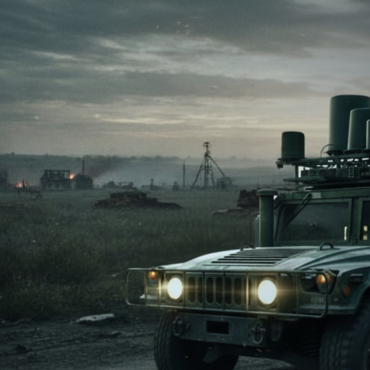
The enemy (Russia) is making extensive use of radio-controlled unmanned aerial vehicles to strike our equipment and personnel, as well as to conduct reconnaissance and adjust artillery fire. In such conditions, electronic warfare (EW) systems are not “additional equipment,” but one of the key tools for protecting a unit. Their role is straightforward: they disrupt the drone’s control links, video transmission, and navigation.
Radio-controlled drones are a daily threat
On the battlefield, two types of threats are encountered most often. The first is strike FPV drones, which rapidly attack positions, vehicles, shelters, and logistics. The second is reconnaissance quadcopters (for example, DJI Mavic), which conduct surveillance, identify targets, and assist in artillery fire correction. Importantly, this is a mass-use weapon: drones are employed constantly, in large numbers, and across different sectors of the front. That is why counter-UAV measures must be systematic rather than occasional.
EW as a basic layer of unit protection
In practice, most solutions used by military units are vehicle-mounted EW systems, also referred to as dome EW systems. These are installed on pickup trucks, SUVs, or other platforms to provide protection during movement, evacuation, ammunition resupply, and operations at positions. In addition to vehicle-mounted systems, other application types include trench EW systems, man-portable backpack EW systems, and handheld EW devices.
What exactly EW does
EW affects the drone’s “nervous system” — its communications. Depending on the model and mission, the drone’s critical links include:
- the control channel;
- the video and telemetry transmission channel;
- navigation signals, if the system relies on them.
When these channels degrade or are disrupted, it becomes harder for the operator to maintain control of the drone, guide it onto the target, and complete the attack. Even a brief loss of signal reduces accuracy and often causes a strike or reconnaissance mission to fail.
Why this directly saves lives
- fewer successful FPV attacks against personnel and equipment;
- fewer “eyes” in the sky, which means less fire adjustment against your position;
- more time to react: to take cover, change position, regroup, or engage the threat with firepower.
EW does not guarantee absolute protection, but it significantly reduces the probability of being hit — and that is critical in a drone war.
Fiber-optic drones: an important clarification
Fiber-optic drones cannot be stopped by radio jamming, because their control link is not transmitted through the air, but through a fiber-optic cable. However, they are not used as frequently as conventional radio-controlled UAVs and have not fully replaced them. Therefore, EW remains relevant and necessary — the majority of threats in many sectors still depend on radio channels.
A condition for effectiveness: cover all known channels in the sector
For EW to work effectively, the system must suppress all known channels used by the enemy in your specific sector. If only part of them is covered, the enemy can bypass the protection by switching to other frequencies or operating modes. In practice, this means EW must be configured for the real operational environment, not used in a “universal” manner without regard to place and time.
Why coordination with electronic intelligence is necessary
The electromagnetic environment changes constantly: the enemy adapts, changes FPV control frequencies, settings, and methods of data transmission. That is why effective EW employment requires coordination with signals intelligence / electronic intelligence (SIGINT/ELINT) regarding current frequencies and typical channels in the specific sector. This turns EW into a precise countermeasure tool rather than a formal “switch it on and hope for the best” approach.
That is also why it is important to choose the right EW supplier. For example, the Ukrainian EW manufacturer 3AVADA (ZAVADA) has been actively engaged for more than two years in the development, production, and maintenance of EW systems for various applications. Its team consists of experienced specialists who provide end-to-end консультація and help assemble the exact EW solution that best matches the customer’s requirements across all parameters.
Conclusion
EW is critically important for the military because most enemy drones rely on radio channels. It disrupts control, reduces the accuracy and effectiveness of attacks and reconnaissance, and directly lowers losses. Maximum effect is achieved through two factors: full suppression of all known channels in the sector, and continuous verification of frequencies and operating modes together with electronic intelligence. Therefore, it is essential to support military units on a regular basis and to ensure that existing EW systems remain up to date and fully operational.